Surety Bonds for Homebuilders Expanding Into New States: A Multi-State Compliance Guide
A production builder that's ready to open a subdivision phase in a new state has usually already solved the hard problems — land, financing, crew, materials supply. Then bonding turns into an unexpected scramble in the final weeks before breaking ground, because a lot of builders assume a license or permit bond is portable the way, say, a general liability policy roughly is. It isn't. Bonds are jurisdiction-specific, and treating them as an afterthought is the single most common way a multi-state expansion gets delayed at the finish line.
Why You Can't Just "Reuse" a License Bond in a New State
A license or permit bond is a standing requirement to hold your contractor license, and it's issued against a specific state's licensing board — sometimes against a specific city or county's licensing authority within that state. The bond you hold to operate legally in your home state satisfies that state's obligee and that state's bond form. It does not satisfy a different state's licensing board, because that board is a different obligee entirely, often with a different required bond amount, a different bond form, and its own filing process.
This catches even experienced builders off guard, because insurance doesn't usually work this way — a GL policy with adequate limits generally travels with you regardless of which state you're working in, subject to state-specific pricing. Bonds don't follow that pattern. Expect to secure a new bond in every new jurisdiction before you can legally break ground there, and don't assume your existing bond, however large, gives you any credit or standing in a state where you've never held a license.
The same logic applies at the sub-state level in states that license or permit at the city or county level rather than (or in addition to) the state level. A builder moving into a new county within a state they already operate in should specifically check whether that county or city has its own separate bonding requirement layered on top of the state-level bond — a detail that varies enough by jurisdiction that it needs to be checked case by case, not assumed either way.
A Bonding Checklist Before Breaking Ground in a New Market
Building a simple checklist before you commit to a new market timeline keeps bonding from becoming the thing that delays your first shovel in the ground:
- Identify every licensing authority with jurisdiction over the project — state licensing board first, then check for city or county-level requirements layered on top.
- Confirm the required bond amount and bond form for each authority. Amounts and forms are not standardized across states; assume nothing carries over from your home state.
- Confirm whether the bond needs to be filed before you apply for a license, or as part of the license application itself. The sequencing varies by jurisdiction and affects your realistic timeline.
- Pull current credit and financial documentation early. Bond underwriting is credit-driven (more on this below), so having this ready before you need the bond fast avoids delays at the worst possible time.
- Set a target bond-in-hand date that's meaningfully ahead of your planned groundbreak date — not the same week. Underwriting, filing, and any state-specific processing time all eat into your runway.
- Confirm renewal cadence for each jurisdiction's bond, since most license bonds renew annually and you'll be tracking multiple renewal dates going forward, not just the initial bond.
Treating this as a checklist to clear months before groundbreak, rather than a task to start once the crew is already scheduled, is the single biggest difference between a smooth multi-state expansion and a delayed one.
Typical Bond Amounts by Project & License Type
Bond amounts vary by state and by license type, but a few common tiers show up repeatedly across jurisdictions for residential and general contractor license bonds:
- Around $10,000 — a common entry-level tier for smaller residential contractor licenses in a number of states
- Around $30,000 — a mid-tier amount used by several states for general or residential building contractor licenses
- Around $50,000 — a common tier for larger general contractor licenses, and the amount many production builders end up bonded for as their standard state-level requirement
- Up to $1,000,000 — reserved for larger commercial licenses or certain specialty license categories in some states
What drives which tier applies to you is the state's own licensing statute and your specific license classification — not your company's size or revenue directly. A production builder and a small custom-home GC seeking the same license classification in the same state are typically subject to the same required bond amount, even though their operations look very different.
Beyond the standing license bond, project-specific bid, performance, and payment bonds come into play separately when a builder is guaranteeing a specific contract — these are sized to the value of that particular project rather than a fixed statutory tier, and they layer on top of, not instead of, your standing license bond.
How Underwriting Works Across Multiple Simultaneous Bond Applications
If you're used to how insurance underwriting works, bond underwriting will feel different — and understanding that difference matters a lot when you're filing several bond applications across different states at once.
Insurance underwriting is largely loss-history-driven: carriers price you based on your claims history, safety record, and operational risk factors. Bond underwriting is largely credit-driven: surety companies are primarily assessing your personal and business credit, along with financial strength, because a bond claim ultimately has to be reimbursed by you to the surety — the surety is fronting money on your behalf, not absorbing a covered loss the way an insurer does on a claim.
That distinction has a practical upside when you're expanding into multiple states at once: a builder with strong, stable credit generally underwrites cleanly across several simultaneous bond applications, since the underlying financial picture doesn't change from state to state even though the bond amount, form, and obligee do. What does change state to state is the premium rate applied against that bond amount — so a builder with the same credit profile can still see somewhat different pricing across states purely based on each jurisdiction's own bond market and required amount.
Premium (not the bond's face amount) typically runs somewhere between 1% and 15% of the bond amount, with well-qualified builders on strong credit landing toward the lower end of that range across most jurisdictions.
This also means the timeline for getting bonded in a new state is largely a documentation and processing exercise rather than a lengthy investigation the way an insurance claim history review can be. Once your credit and financial documentation are in order, most license bond applications move relatively quickly — which is exactly why the real risk in a multi-state expansion isn't that bonding is hard, it's that it gets started too late relative to a groundbreak date that was set based on land and financing timelines, not insurance and bonding timelines.
Common Mistakes That Delay a Multi-State Bond
A few patterns show up repeatedly when a production builder's bonding process runs late:
- Assuming the home-state bond amount applies everywhere. A $50,000 bond requirement in one state tells you nothing about what a different state requires — some run lower, some run higher, and the only way to know is to check that state's specific licensing statute.
- Waiting until the license application to start the bond conversation. In many jurisdictions the bond has to be in hand, filed, and confirmed before the license application can even be submitted — starting both at once just pushes your groundbreak date back.
- Not accounting for city or county-level bonds layered on top of a state bond. This is the detail builders miss most often when they've only ever operated in states with a single state-level requirement and assume every market works the same way.
- Letting a bond lapse during a slow season and not noticing until the next project needs it. A lapsed bond in a state you're not actively building in right now can still block you from bidding or permitting new work there later if it isn't caught and renewed on schedule.
Coordinating Renewal Dates Across Multiple States
Once you're bonded in several states, the operational challenge shifts from "getting bonded" to "staying bonded" — and a lapsed license bond in any one jurisdiction can jeopardize your ability to legally operate there, even if every other state's bond is current.
Because bonds are typically renewed annually per jurisdiction, a builder operating in five states is tracking five separate renewal dates, potentially with five different surety relationships if bonds weren't consolidated through one agency. A few practices keep this manageable:
- Centralize renewal tracking in one place rather than relying on each state's surety to remind you independently.
- Review credit standing ahead of each renewal cycle, not just at initial application, since a credit change can affect renewal premium.
- Flag any bond claims immediately to whoever manages your bonding program — a claim in one state can affect underwriting on bonds in other states, since sureties evaluate your overall bond claims history, not just claims within a single jurisdiction.
Why a Single Nationwide Agency Is Operationally Simpler
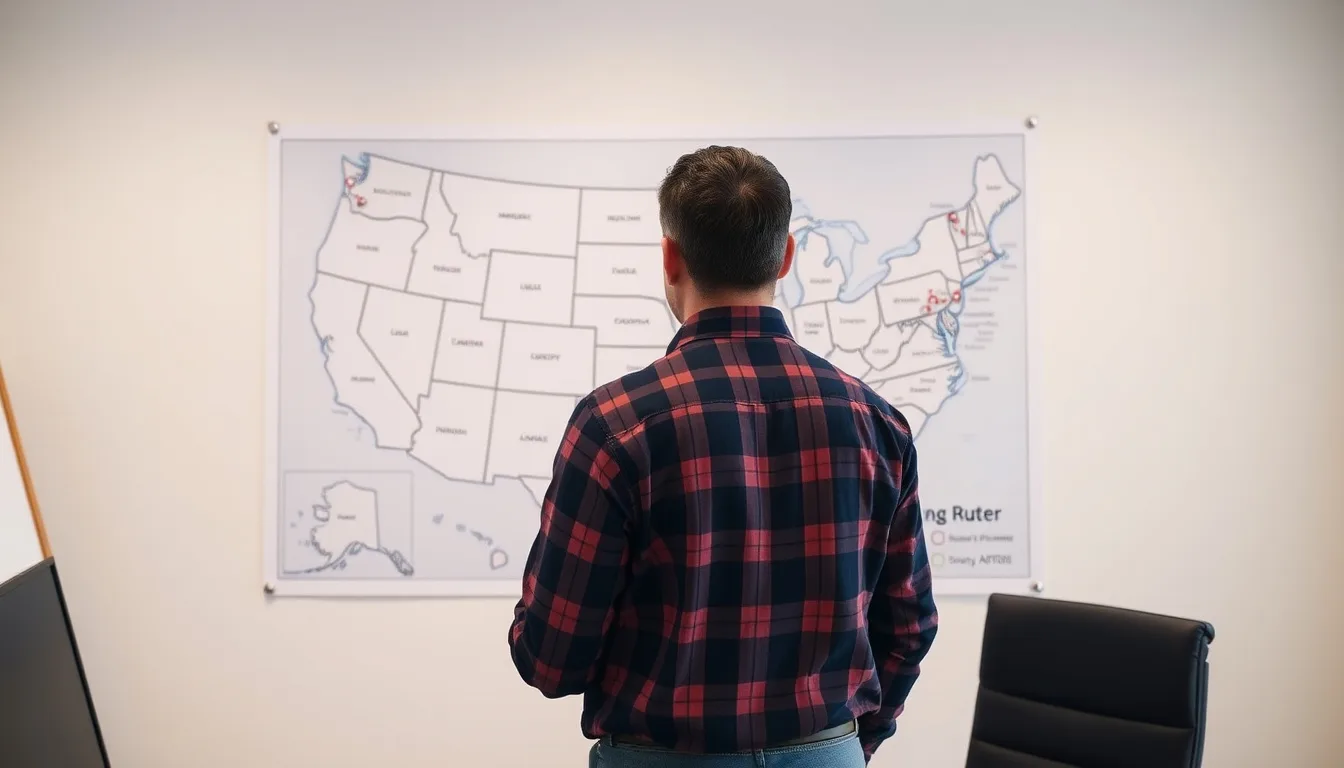
A builder expanding market by market has a choice: find and manage a separate local bond agent in every new state, or work with one nationwide agency that can place and track bonds across every jurisdiction you operate in. The second option isn't just more convenient — it removes a real coordination risk. One point of contact who already has your financials, your credit profile, and your bonding history on file can move faster on a new-state bond application than starting from scratch with a local agent who's never worked with you before, and it means renewal dates, claims history, and credit updates are tracked in one place instead of scattered across a handful of disconnected relationships.
This is exactly the kind of coordination gap that shows up as builders scale past their home state — and it's a genuine differentiator for a nationwide agency built specifically around contractor and homebuilder bonding, rather than a local shop that handles bonds occasionally.
Get Bonded Ahead of Your Next Market
If you're planning to break ground in a new state, county, or city, the time to start the bonding conversation is now — before it's the thing standing between your crew and a groundbreak date. Contractors Choice Agency is licensed in all 50 states (NPN #8608479) and works with production builders and residential GCs expanding into new markets nationwide, coordinating license bonds, bid and performance bonds, and renewal tracking across every state you build in.
Call 844-967-5247 or request a free quote, and we'll map out exactly what you need bonded before you break ground in your next market.
Ready for a real quote?
Fast quotes nationwide — tell us about your operation and get a coverage package built for production-scale building.