CONTRACTORS POLLUTION LIABILITY
Contractors Pollution Liability Insurance for Homebuilders
A fuel spill from a grading crew's equipment or mold found in a closed-out home can trigger a claim your general liability policy is specifically written to exclude — pollution liability is where that exposure actually gets covered.
What Contractors Pollution Liability Covers
Contractors pollution liability (CPL) insurance covers claims arising from pollution conditions — spills, contamination, mold growth, and similar environmental exposures connected to your site work, whether the incident originates on your own equipment or is simply discovered during your scope of work. This includes both the cleanup costs to remediate the pollution condition itself and third-party claims for bodily injury or property damage caused by it, such as a neighboring property affected by runoff or a buyer's mold claim on a completed home.
The reason this needs its own dedicated policy is straightforward: standard general liability policies typically carry a pollution exclusion, and that exclusion has become increasingly standard across the industry rather than a rare carve-out. If your GL policy excludes pollution — and most current-generation policies do — a spill, contamination event, or mold claim connected to your site work simply won't be covered without a separate CPL policy in place.
CPL policies can typically be written on a site-specific basis, covering a single project or subdivision phase, or as a practice policy covering all of a builder's active and future sites over the policy term. Which structure makes more sense depends heavily on how many projects you're running at once and how much your site-to-site environmental risk profile varies — a decision worth working through with an agent rather than defaulting to whichever option a carrier quotes first, since the wrong structure can leave a newly acquired site uncovered until the next renewal.
Who Needs This Coverage
Production builders doing significant grading and excavation work carry meaningfully higher pollution exposure than a builder working on a previously developed, already-graded lot, simply because more earthwork means more opportunities for fuel spills, soil disturbance, and contamination discovery. Builders working on former agricultural or industrial land face an additional layer of risk, since that land can carry legacy contamination — pesticide residue, old fuel tanks, industrial byproducts — that surfaces only once earthwork begins.
Beyond site history and scope of earthwork, the practical trigger for most builders is simpler: if your general liability policy has a pollution exclusion, and it very likely does, you have a real coverage gap the moment any site work, mold-related claim, or contamination issue arises. That gap exists whether or not the land has an obviously risky history, which is why CPL is worth evaluating even on sites that look clean on paper.
Builders working across multiple soil and climate conditions in different states should also weigh regional exposure differences — heavy grading in expansive-clay regions, high-water-table sites prone to moisture intrusion, or markets with a history of underground storage tanks on formerly commercial parcels can all raise the practical likelihood of a pollution-related claim, even without a documented industrial history on the specific lot. A nationwide builder moving between these environments benefits from a program that's actually priced against each site's real conditions rather than one blanket assumption applied everywhere.
Common Pollution Exposures in Homebuilding
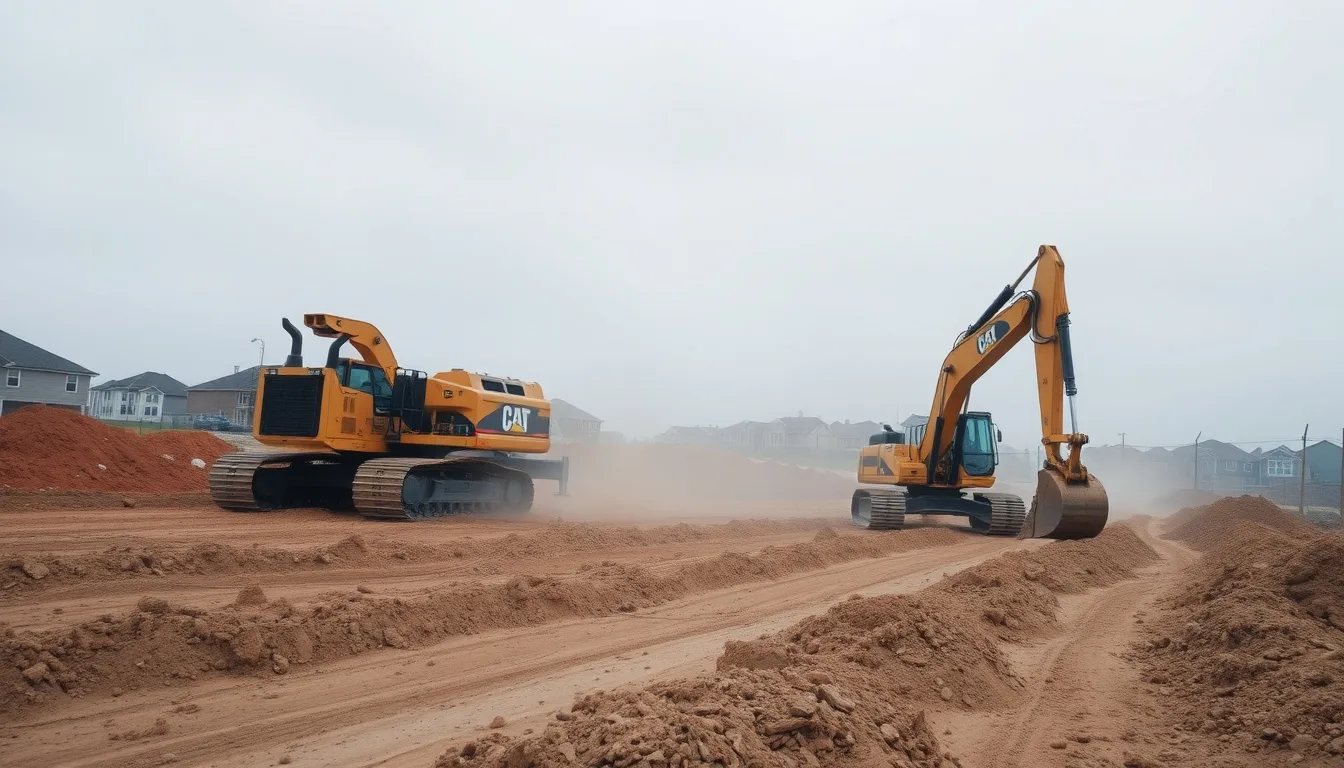
The most frequent exposure on an active homebuilding site is a fuel or chemical spill from heavy equipment — excavators, graders, and other machinery running on diesel and hydraulic fluid, with plenty of opportunity for a leak or spill during routine grading and site prep work. These incidents don't require a catastrophic failure to trigger a claim; a routine equipment leak that reaches soil or a storm drain is enough.
Mold claims on completed homes are another common trigger, often surfacing well after closing when moisture intrusion during construction wasn't fully addressed before the home was finished and sold. Soil contamination discovered mid-development — sometimes tied to the land's prior use, sometimes simply found during grading — rounds out the most common exposures homebuilders actually face, and any of the three can arise on a site that otherwise looks completely routine.
Underground obstructions are a related and easily overlooked exposure — old septic systems, buried fuel tanks, or agricultural chemical storage from a property's earlier use can go completely undetected until an excavator strikes them mid-grading, at which point the builder is dealing with an active contamination event on a live jobsite, often with a subdivision schedule already in motion around it and buyers already contracted on homes downstream in the same phase.
What Drives the Cost of Pollution Liability Coverage
Premium starts with the site's environmental history — a Phase I environmental site assessment showing a clean history on raw land supports better pricing than a site with any documented prior industrial, agricultural, or fuel-storage use. Carriers weigh that history heavily because it's the single best predictor of latent contamination risk.
Scope of earthwork is the next major factor — the more extensive the grading, excavation, and soil disturbance involved in a project, the more opportunity there is for a pollution event, and pricing reflects that. Claims history rounds out the underwriting picture, with builders carrying a clean pollution-claims record generally qualifying for more favorable terms than those with a prior spill or contamination claim on file.
Policy limit and duration also factor into cost — a single-project policy covering one subdivision phase over its build-out timeline is priced differently than a practice policy running across a builder's full active portfolio year over year. Builders regularly doing new grading work on undeveloped land should expect this line to be priced more like an ongoing cost of doing business than a one-time add-on.
Why Lenders and Developers Increasingly Require It
It's becoming standard for lenders and land developers to require proof of contractors pollution liability coverage before releasing funds or permitting a new subdivision phase to begin construction — not because every site has a known contamination issue, but because the financial exposure from an undiscovered one is significant enough that lenders want it covered before capital is committed.
This mirrors the same pattern seen with builders risk and umbrella requirements: institutional counterparties are setting insurance conditions into their financing and development agreements as a standard risk-management practice, not a reaction to a specific site problem. Builders who already carry CPL coverage clear that underwriting step faster, without a scramble to bind a policy mid-negotiation once a lender or developer flags the requirement.
This is worth planning for early rather than at the last minute — CPL underwriting typically involves reviewing site history and sometimes an environmental assessment, which takes time to assemble. Builders who wait until a lender flags the requirement mid-financing often find themselves scrambling to bind coverage against a closing deadline instead of having it in place well before the phase is scheduled to break ground.
Get a Contractors Pollution Liability Quote
If your projects involve grading, excavation, previously developed land, or a lender/developer contract that requires proof of pollution coverage, we'll review your site scope and put together a CPL policy that fits the actual exposure — not a generic environmental policy built for a different kind of business.
Call 844-967-5247 or email josh@contractorschoiceagency.com for a free contractors pollution liability quote. NPN #8608479. Licensed in all 50 states.
Nationwide, we've seen how site risk varies significantly from region to region — coastal water tables, former agricultural corridors, older industrial-adjacent parcels — and we'll factor your actual site history and geography into the quote rather than pricing every project the same way regardless of where it's being built. If a lender or developer has already handed you a specific coverage requirement, bring it to the call and we'll quote directly against it.
Contractors Pollution Liability FAQs
Straight answers before you apply
Almost certainly not. Standard general liability policies typically carry a pollution exclusion, and that exclusion is increasingly standard industry-wide. A spill, contamination event, or mold claim connected to site work needs a separate contractors pollution liability (CPL) policy to be covered.
The most common are fuel or chemical spills from grading and excavation equipment, mold claims on completed homes tied to moisture intrusion during construction, and soil contamination discovered mid-development, sometimes connected to the land's prior agricultural or industrial use.
It's become standard practice for lenders and land developers to require proof of CPL coverage before releasing funds or permitting a new phase, protecting their capital against the financial exposure of an undiscovered contamination issue — not necessarily because a specific problem is known.
You should evaluate it regardless of site history, since most GL pollution exclusions apply no matter how clean the land looks on paper. That said, previously agricultural or industrial land carries added risk from legacy contamination that can surface once earthwork begins.
Yes — call 844-967-5247 or email josh@contractorschoiceagency.com and we'll review your site scope and any lender or developer requirements to put together a coverage plan.
Building a subdivision? Get coverage sized for the job.
Fast quotes nationwide for production homebuilders — general liability, builders risk, workers' comp, and bonds, from one agency that speaks your trade.