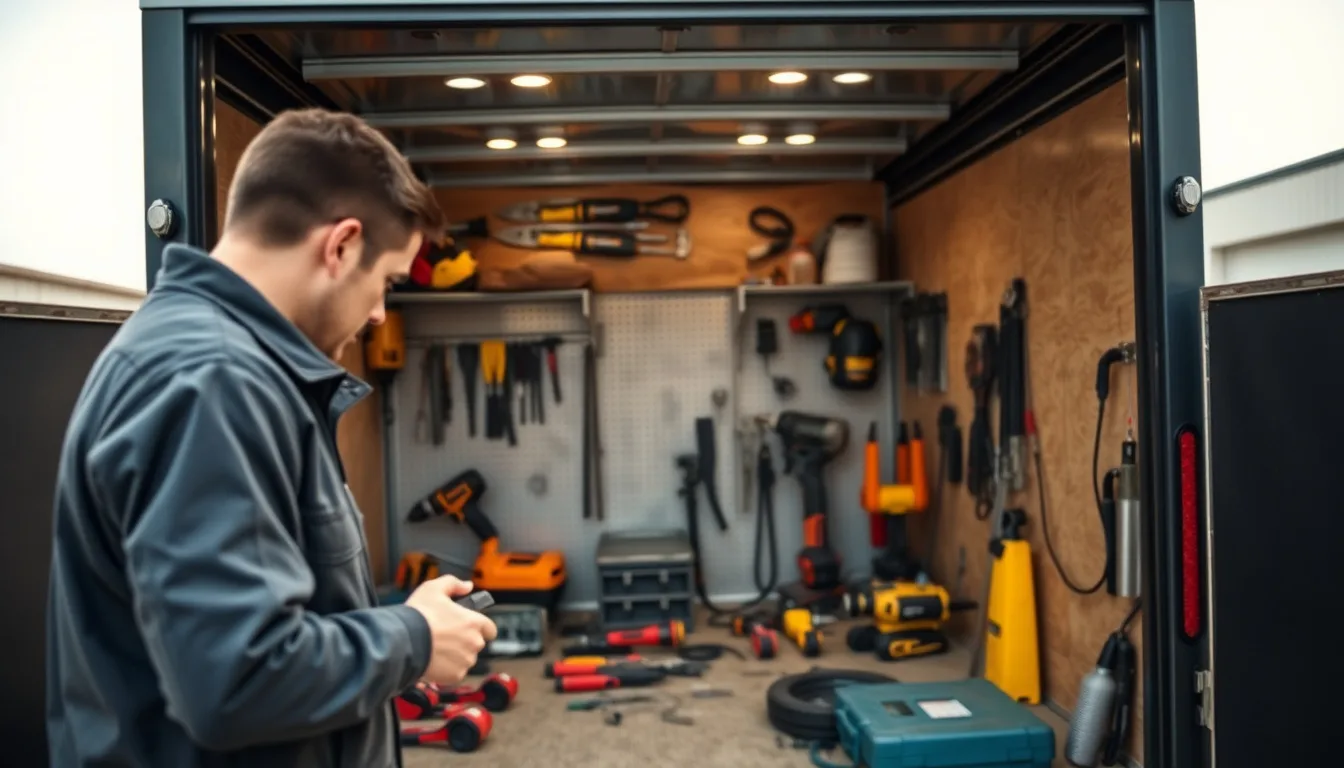
TOOLS & EQUIPMENT INSURANCE
Tools & Equipment Insurance (Inland Marine) for Homebuilders
Skid steers, framing nailers, and staged material don't stop being valuable just because they're sitting on an unoccupied lot overnight — inland marine coverage protects the property your business actually owns, not just your liability to others.
What Tools & Equipment (Inland Marine) Insurance Protects
Inland marine insurance is the commercial line that covers property that moves — tools, equipment, and materials that travel between job sites, sit in a trailer overnight, or get staged on a lot before installation. For a homebuilder, that means framing tools, compressors, generators, skid steers, scaffolding, and the lumber and fixtures staged for the next phase of a build. The policy responds to theft, fire, vandalism, and accidental damage, whether that property is actively being used on-site, parked in a locked trailer, or sitting in a rented storage yard between subdivision phases.
This is a first-party coverage line, meaning it pays your business directly for the loss of your own property — it isn't triggered by a claim from someone else. A stolen table saw, a vandalized generator, or a load of framing tools taken out of an unlocked trailer overnight are all inland marine claims, not liability claims, and they're a real and recurring cost of doing business on active construction sites.
The term "inland marine" is a legacy insurance-industry label — it originated from ocean marine coverage extended inland to goods in transit over land, and today it's simply the standard commercial line for movable business property. For a homebuilder, that means the policy is built around exactly the kind of equipment your operation depends on daily: portable, valuable, and constantly changing location between lots, storage, and transit.
Why Homebuilders Need This Beyond General Liability
General liability insurance protects your business against claims from other people — a subcontractor's injury, damage to a neighboring property, a completed-operations defect claim from a homeowner years after closing. It was never designed to cover your own tools and equipment, and it doesn't. If a crew's tool trailer gets broken into overnight or a skid steer is stolen off an active lot, a standard GL policy simply won't respond to that loss.
That gap surprises a lot of builders the first time it matters, usually right after a theft. Tools and equipment insurance exists specifically to close it, covering the property your business owns and depends on to keep crews productive. For a production builder running multiple active lots at once, that property represents real capital sitting exposed on unsecured sites every single night — which is exactly the risk this coverage is built to absorb.
Who Needs This Coverage
Any builder or general contractor who owns or leases tools, equipment, or heavy machinery needs some form of inland marine coverage — the exposure exists the moment you own anything worth stealing or damaging. That said, the risk scales sharply with the number of active sites you're running at once. A single custom-home GC has one jobsite to secure; a production builder working three, five, or a dozen lots simultaneously across a subdivision has that many more unoccupied, partially built structures and staged materials sitting exposed at any given time.
Unoccupied framed structures and staged material pallets are a documented target for jobsite theft — there's no one on-site overnight, the property is easy to identify from the street, and a subdivision under active construction telegraphs exactly where the valuable equipment is parked. Production builders should treat tools & equipment coverage as a standard line item across every phase, not an afterthought added after the first loss.
It's also worth planning coverage around your build calendar rather than setting it once and forgetting it. As a production builder opens a new phase, breaks ground on additional lots, or brings on equipment for a specific push, the tool and equipment inventory exposed on-site at any given time changes — and the policy limits should be reviewed alongside that growth rather than left at whatever figure was set when the business was smaller.
What Drives the Cost of This Coverage
Premium is driven primarily by the total insured value of the tools and equipment you're covering — the more you own, the more there is to insure. Beyond that baseline, carriers look closely at theft history in the areas you build, since some regions and neighborhoods simply see more jobsite theft than others, and at the deductible level you choose, with higher deductibles lowering premium in exchange for absorbing more of a smaller loss yourself.
How you structure the policy also affects price. A blanket limit covering a rotating pool of tools across multiple crews is priced differently than a schedule of specific high-value items, and builders who can document security measures — locked trailers, GPS tracking on major equipment, secured laydown yards — often qualify for better terms than those with no documented loss-prevention practices at all.
Deductible strategy is worth thinking through deliberately rather than defaulting to whatever a quote starts at. A lower deductible makes sense for high-value, hard-to-replace equipment where any loss is disruptive; a higher deductible on the general tool inventory can meaningfully reduce annual premium for a builder confident in day-to-day loss prevention. We'll walk through both sides of that tradeoff against your actual claims appetite before setting the policy.
Scheduled vs. Blanket Coverage — Which Fits Your Operation
Scheduled coverage lists specific high-value items individually — a particular skid steer, a compressor, a trailer-mounted generator — each with its own stated value and premium. It's the right approach for expensive, identifiable equipment you own long-term and want insured at its actual value, item by item, without any ambiguity at claim time.
Blanket coverage instead sets a single overall limit that applies across a rotating inventory of smaller tools — nail guns, hand tools, ladders, smaller power equipment — that moves between crews and job sites constantly and would be impractical to schedule individually. Most production builders end up running both structures at once: scheduled limits on the big-ticket machinery, blanket coverage for the working tool inventory that circulates across every active lot. We'll help you sort your equipment list into the structure that actually fits how your crews operate.
- Scheduled: named, itemized coverage for specific high-value equipment
- Blanket: one limit covering a rotating pool of smaller tools and gear
- Most production builders run a blend of both
Materials in Transit and in Storage — The Coverage Gap Builders Miss
A lot of builders assume their coverage only applies while equipment is actively being used on an active lot, and that assumption creates a real gap. Materials and tools are frequently at their most vulnerable in transit — loaded on a trailer overnight in a parking lot, staged at a supply yard waiting for delivery, or sitting unattended between a Friday afternoon delivery and a Monday-morning crew arrival.
A well-written tools & equipment policy extends coverage across all three states: on the job, in transit between locations, and in storage. Before you assume you're covered, it's worth confirming exactly where your current policy's coverage starts and stops — the gap between 'on the truck' and 'on the lot' is one of the most common surprises builders discover only after a loss, and it's an easy one to close upfront with the right policy language.
Get a Tools & Equipment Coverage Quote
If your crews are running equipment across multiple active lots, your exposure to theft and damage is larger than a single-site GC's — and your coverage should reflect that. We'll walk through your current tool and equipment inventory, help you decide what belongs on a schedule versus a blanket limit, and put together a policy that actually follows your equipment between sites, storage, and every active phase you're building.
Call 844-967-5247 or email josh@contractorschoiceagency.com for a free tools & equipment insurance quote. NPN #8608479. Licensed in all 50 states.
Tools & Equipment FAQs
Straight answers before you apply
No. General liability covers claims from third parties — injuries and property damage you cause to others. It doesn't cover your own tools, equipment, or materials, which is why tools & equipment (inland marine) insurance exists as a separate, first-party coverage line.
Scheduled coverage lists specific high-value items individually, each with its own stated value — the right fit for expensive machinery you own long-term. Blanket coverage sets one overall limit for a rotating pool of smaller tools that move between crews and sites constantly. Most production builders use a blend of both.
They should be, but confirm it before assuming so — a properly written policy extends coverage across on-site use, transit between locations, and storage. The gap between 'on the truck' and 'on the lot' is a common blind spot builders only discover after a loss.
Often, yes. Carriers frequently offer package discounts when general liability, tools & equipment, and other lines are bound together, and bundling with one agency simplifies renewal and claims handling across your whole coverage stack.
Yes — call 844-967-5247 or email josh@contractorschoiceagency.com and we'll put together a coverage plan based on your actual tool and equipment inventory, not a generic template.
Building a subdivision? Get coverage sized for the job.
Fast quotes nationwide for production homebuilders — general liability, builders risk, workers' comp, and bonds, from one agency that speaks your trade.