Tract Home & Production Homebuilder Insurance: The Complete 2026 Cost & Coverage Guide
If you build homes for a living — whether that's a single custom project at a time or a multi-phase subdivision with a dozen lots moving at once — "how much does homebuilder insurance cost" is the wrong first question. The right first question is "what does my operation actually expose me to," because a production builder running four active phases with a full-time framing crew needs a fundamentally different coverage stack than a residential GC building one custom home a year. This guide walks through the full stack a homebuilder needs to consider, what drives the price of each piece, and how to think about scale honestly instead of chasing a generic quote that doesn't match your operation.
The Full Coverage Stack, At a Glance
A production or tract homebuilder's insurance program typically draws from eight coverage lines. Not every builder needs every line — the right mix depends entirely on your scale, whether you have employees, how many lots you're actively building, and whether you self-perform any trade work.
- General liability (GL) — the foundation policy nearly every builder needs; covers third-party bodily injury and property damage claims
- Builders risk — covers the structure and materials under construction against fire, wind, theft, and vandalism
- Workers' compensation — required in nearly every state once you have employees
- Surety bonds — license/permit bonds required to hold a contractor license, plus bid and performance bonds for specific contracts
- Commercial auto — for company-titled trucks, vans, and trailers moving crews and materials between lots
- Tools & equipment (inland marine) — covers your own tools, equipment, and staged materials against theft and damage
- Umbrella/excess liability — additional limits above GL, auto, and employer's liability once the underlying policies are exhausted
- Subcontractor default insurance (SDI) — a large-production-builder-only product that most readers of this guide should not buy (more on that below)
The honest caveat up front: there is no flat number that represents "homebuilder insurance cost." A custom-home GC with no employees might carry only GL and a license bond for a few thousand dollars a year. A production builder running four subdivision phases with a 20-person crew, blanket builders risk, bonds in three states, and a $5M umbrella tower is a completely different budget. What follows is built to help you figure out where your operation actually sits.
Why Production & Tract Homebuilder Insurance Is Different
A lot of coverage guides treat "contractor insurance" as one undifferentiated category. It isn't. A single-trade subcontractor — a framer, an electrician, a roofer — generally has one kind of exposure: the work they personally perform on one job at a time. A production homebuilder building a subdivision phase has a fundamentally larger and more simultaneous exposure profile:
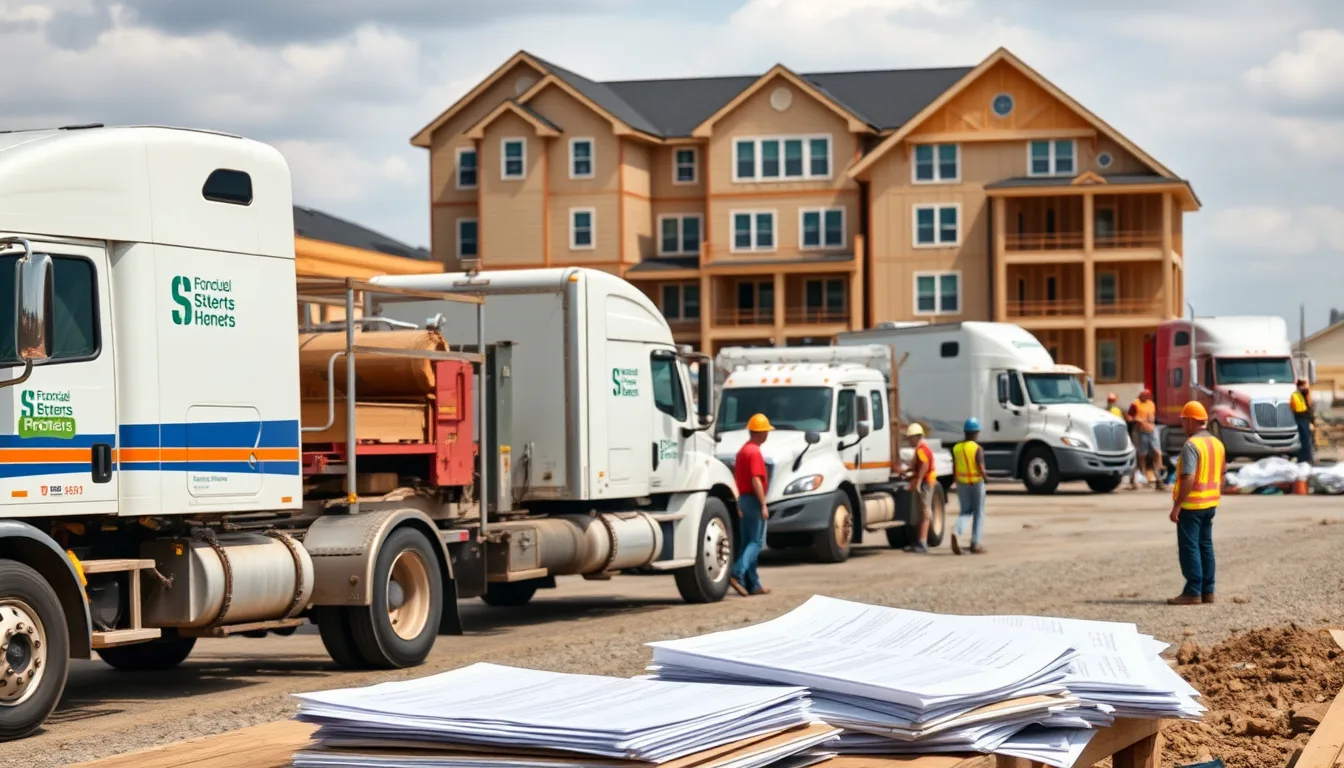
- Multi-lot exposure at the same time. Six, ten, or twenty homes are framed, roughed-in, and closed out simultaneously across a phase. A fire that spreads across two adjacent framed lots, or a wind event that damages an entire street of unoccupied structures, is a single incident with a multiplied claim size — not a single-home loss.
- Completed-operations claims across dozens of buyers, not one. If a systemic issue — a defective material batch, a repeated framing detail, a foundation-prep shortcut — shows up in the homes from one subdivision phase, that's potentially a dozen or more completed-operations claims stemming from the same root cause, filed by different homeowners at different times over the years after closing.
- Higher limits lenders and land developers increasingly require. As builders scale, lenders financing the development and land developers releasing phases for construction are more likely to contractually require $2M, $5M, or higher combined liability limits before work starts — limits a single custom-home GC rarely gets asked for.
None of this means the coverage is more complicated to buy — it means the limits, the policy structure (blanket vs. per-project), and the completed-operations tail all need to be sized to subdivision-scale risk rather than a generic small-contractor template.
General Liability Deep Dive
General liability is the coverage almost every builder — production or custom — is asked to show proof of before a lender releases funds, a developer releases a phase, or a state licensing board issues a license. It covers third-party bodily injury and property damage claims against your business, along with completed-operations claims: damage that shows up after the job is done and traces back to your work.
That completed-operations piece deserves special attention for homebuilders specifically. Most trade subcontractors face completed-operations exposure on a single scope of work at a single address. A homebuilder faces it on the entire structure, at every address in a subdivision, for years after closing — which is exactly why homebuilder GL policies typically need a longer completed-operations tail than a typical single-trade policy.
Cost for GL is driven by a handful of real factors, not a flat rate card:
- Payroll and revenue — the primary rating basis for most GL policies
- Number of active lots and phases — more simultaneous exposure means more rating basis
- Trade mix — if you self-perform any framing, concrete, or other trade work rather than subbing it all out, that changes the rating
- Claims history — prior GL claims move your renewal price directly
- State — high-litigation states price meaningfully higher; search data on GL-related queries shows a real gap here, with California-modified GL search terms carrying a CPC around $150.83 against a national average around $101.96 for the same core term — a rough proxy for how much more carriers are pricing GL risk in California relative to the rest of the country
It's also worth being clear about what GL does not cover — the single most common point of confusion for builders new to commercial insurance: it does not pay to redo your own faulty workmanship, does not cover employee injuries (that's workers' comp), does not cover your own tools and equipment (that's inland marine), and does not cover the structure itself under construction (that's builders risk). GL responds to third-party claims only — it's one piece of the stack, not the whole stack.
Builders Risk Deep Dive
Builders risk (also called course-of-construction insurance) covers the structure, materials, and fixtures on a job site against fire, wind, theft, and vandalism from groundbreak through closing. It is the coverage that actually protects the physical asset you're building — GL doesn't touch this.
For production builders, the real decision isn't whether to carry builders risk — it's whether to carry it as a blanket policy or on a per-project basis. A blanket, reporting-form policy covers every active lot in a subdivision under one policy, with coverage automatically extending to new lots as construction starts, rather than requiring a brand-new policy filed for every individual home. That's a meaningfully better fit for a builder running multiple simultaneous phases — fewer renewal dates to track, fewer gaps between "old policy expired" and "new policy bound." A custom-home GC building one house at a time typically stays on a single-project policy sized to that build's value and timeline instead.
Cost drivers for builders risk include:
- Total insured value under construction — the aggregate value of the structures and materials being covered
- Project type — a single custom home prices very differently than a multi-lot blanket subdivision policy
- Construction materials — some materials carry different fire/wind risk profiles than others
- Location — wildfire, wind, and hail exposure vary sharply by region
- Project duration — standard terms run 3, 6, or 12 months, and a phase that slips past its term needs an extension, which is a real, recurring operational detail for production builders whose schedules routinely shift
One point worth clarifying, because it's a common source of confusion: who buys builders risk — the builder or the homeowner? On a production or tract build, the builder or developer buys and holds the policy, since they own the structure until closing. On an owner-financed custom build, it varies by contract — check your specific build agreement. Coverage also typically ends at completion, closing, or occupancy, with the buyer's homeowners policy taking over from there — which means builders closing out a rolling schedule of homes need a real process for coordinating that handoff date on every closing, not just the first one.
Workers' Compensation Deep Dive
Workers' compensation covers medical bills and lost wages for employees injured on the job, and it's required in nearly every state once you have employees — often as a prerequisite to even holding a contractor license.
The single most-searched adjacent question here is the 1099-vs-W-2 question: do I need workers' comp for subcontractors, or just employees? In most states, workers' comp is required for your direct W-2 employees; true independent subcontractors who carry their own coverage are generally not your responsibility. But misclassifying a worker who's functionally an employee as a 1099 sub is one of the most common and costly audit findings a builder can have — it doesn't just create a compliance problem, it can blow up your experience modifier and premium at renewal.
Homebuilding crews are rated by class code, and carriers rate framing crews, site supervisors, and office staff differently — getting that classification right matters at quote time and matters even more at audit time, since misclassified payroll is one of the fastest ways an estimated premium turns into a large audit bill.
Cost drivers include payroll by class code, claims history and experience modifier, the state rate table, and your documented safety program. Operationally, production builders should require proof of workers' comp — or a documented exemption where the state allows one — from every subcontractor on every lot. That single practice keeps you from being held liable for an uninsured sub's injured worker. Without required coverage, most states impose fines, can issue stop-work orders, and can expose the business owner personally to injury costs — consequences that scale fast on a multi-crew build.
Bonds Deep Dive
Surety bonds are not insurance, even though builders often shop for them alongside it. A bond is a three-party guarantee — you (the principal), the party you're bonded to (the obligee, often a licensing board or project owner), and the surety that backs the bond. Bonds protect the public and the project owner, not your business, and if a claim is paid out, you're typically required to reimburse the surety — a fundamentally different mechanism than insurance, where a covered loss carries no reimbursement obligation back to the carrier.
Homebuilders typically deal with two categories of bonds:
- License/permit bonds — a standing requirement to hold your contractor license in most states and many local jurisdictions, renewed annually regardless of which specific projects you're working. Required bond amounts vary widely by state and license type — common tiers run from around $10,000 up to $30,000 or $50,000 for standard residential license bonds, with some larger commercial or specialty license bonds set as high as $1,000,000.
- Bid, performance, and payment bonds — project-specific bonds a production builder or GC posts to win and guarantee a particular contract, distinct from the standing license bond.
For builders expanding into new markets, there's a detail that trips up a lot of first-timers: license and permit bonds are jurisdiction-specific. A bond that satisfies your home state's licensing board does not carry over when you open a phase in a new state — sometimes not even in a new city or county within a state you already operate in. Builders opening new markets should expect to secure a new bond for each jurisdiction before breaking ground, which is exactly the kind of coordination a single nationwide agency is built to handle instead of juggling a different local bond agent in every state.
Bond cost is driven differently than insurance cost — underwriting is largely credit-driven, not loss-history-driven, which surprises applicants who assume it works like an insurance quote. Premium (not the full bond amount) typically runs 1% to 15% of the bond amount depending on personal and business credit. A $50,000 license bond, for a builder with strong credit, might cost only a few hundred dollars a year — more for lower credit or higher-risk bond types.
Production builders should also require bonding — not just insurance — from subcontractors on larger jobs, the same way they require proof of workers' comp, as an added layer of protection on bigger scopes of work.
Rounding Out the Stack
Beyond GL, builders risk, workers' comp, and bonds, a handful of additional lines round out a complete homebuilder program depending on your operation:
- Commercial auto covers liability and physical damage for company-titled trucks, vans, and trailers moving crews and materials between lots — plus hired and non-owned auto (HNOA) coverage, which fills a gap builders miss when supervisors use personal vehicles for company business. A personal auto policy will not respond to a jobsite accident in a company truck.
- Tools & equipment (inland marine) covers your own tools, equipment, and staged materials against theft and damage on-site, in transit, and in storage — a real gap since GL only covers third-party claims, not your own stolen skid steer. This matters more for production builders, since equipment moves across multiple active, sometimes unoccupied, lots at once — a known theft target.
- Umbrella/excess liability adds limits above GL, auto, and employer's liability once the underlying policy is exhausted. Production builders tend to need higher limits than a single-project GC, since subdivision-scale exposure — multiple homes, multiple buyers, one systemic issue potentially triggering several claims at once — pushes the realistic worst-case well above a typical $1–2M GL limit. Developers and lenders increasingly require $5M+ in combined limits before a builder can bid a phase.
- Professional liability (E&O) matters for builders doing design-build work or floor-plan customization, covering design-error and advisory claims GL doesn't reach. It matters more for production builders than custom-home GCs, since a design flaw repeated across every home in a subdivision multiplies the claim exposure across dozens of homeowners instead of one.
- Contractors pollution liability matters for builders doing significant grading or excavation, building on former agricultural or industrial land, or whose GL policy carries a pollution exclusion — increasingly standard on many GL forms. Lenders increasingly require proof of it before releasing a phase for construction.
Subcontractor Default Insurance (SDI) — And Why Most Readers Should Skip It
SDI is a real, distinct product from surety bonds, worth understanding even though most builders reading this guide shouldn't buy it. It's a single policy covering financial loss when any subcontractor on a project defaults, in place of requiring each sub to carry a performance bond — and the GC controls the default determination directly, rather than waiting on a surety's independent investigation, which can mean a faster remedy mid-construction.
Here's the honest part: SDI eligibility skews large. It's generally only available or economical for builders with $50 million or more in annual revenue, and some carriers set the bar even higher — $150 million or more in annual subcontracted work. That's not a fit for most small-to-mid production builders; the better move is standard surety bonding, covered above, plus requiring bonds from your own subs on larger jobs. We're covering SDI here for completeness and because a real segment of readers do qualify — but if you're not confident you clear that revenue threshold, bonds are the right tool for your operation, not SDI.
How to Qualify for Better Rates
A handful of practices move the needle on every line in this stack, regardless of scale:
- Document a real safety program. Carriers price GL and workers' comp partly on documented safety practices, not just claims history.
- Require and enforce subcontractor insurance requirements. Proof of GL and workers' comp (or a documented exemption) from every sub on every lot protects your loss history and liability exposure at once.
- Keep a clean claims history — the single biggest lever on renewal pricing across every line in this guide.
- Show consistent year-over-year revenue. Volatility reads as risk to underwriters even when it isn't safety-related.
- Bundle where it makes sense. Carriers frequently discount packages when GL, workers' comp, and other lines are bound together, and one agency simplifies renewal across every state you build in.
Frequently Asked Questions
What insurance does a production homebuilder actually need?
At minimum: general liability, workers' compensation if you have employees, and builders risk on active projects. Most also need a license/permit bond, commercial auto, tools & equipment coverage, and increasingly an umbrella policy.
What's the difference between general liability and builders risk insurance?
General liability covers third-party injury and property damage claims against your business; builders risk covers the physical structure and materials under construction. Most homebuilders need both.
Does general liability insurance cover defective work?
No — GL covers third-party bodily injury and property damage, not the cost of fixing your own faulty workmanship. Completed operations coverage can respond to third-party damage from a defect discovered later, but it won't pay to simply redo bad work.
Who typically buys builder's risk insurance — the builder or the homeowner?
On a production or tract build, the builder or developer buys and holds the policy since they own the structure until closing. On a custom, owner-financed build, it varies by contract, so check your build contract.
Can one builders risk policy cover an entire subdivision phase?
Often, yes — many carriers offer blanket/reporting-form policies designed for production builders working multiple lots at once, rather than requiring a separate policy per home.
Do I need workers' comp insurance for subcontractors, or just employees?
In most states, workers' comp is required for your direct employees; independent subcontractors who carry their own coverage generally aren't your responsibility — but misclassifying an employee as a 1099 sub is a common, costly audit finding.
Do I need a new bond every time I start work in a new state?
Usually yes — license and permit bonds are typically issued per state, and sometimes per city or county, so expect to secure a new bond for each jurisdiction before breaking ground.
How much does a surety bond cost?
Bond premium — not the full bond amount — typically runs 1% to 15% of the bond amount depending on your credit. A $50,000 license bond might cost a well-qualified builder a few hundred dollars a year.
Is subcontractor default insurance right for my company?
Probably not, unless you're a large production builder. SDI generally requires $50 million or more in annual revenue, with some carriers requiring $150 million or more in subcontracted work. Most homebuilders are better served by requiring standard surety bonds from subs instead.
Can one agency handle insurance for a builder operating in multiple states?
Yes — one point of contact can coordinate GL, workers' comp, bonds, and builders risk across every state you're actively building in, instead of a string of local agents.
Get a Coverage Plan Built for Your Actual Operation
Whether you're a residential GC building one custom home a year or a production builder running four subdivision phases at once, the right coverage stack depends on your real operation, not a generic template. Contractors Choice Agency is licensed in all 50 states (NPN #8608479) and works exclusively with builders and contractors — we already know the questions that matter: active lot count, crew size, trade mix, and where you're building next.
Call 844-967-5247 or request a free quote and we'll walk through your GL, builders risk, workers' comp, bonds, and the rest of the stack together, sized to what you're actually building.
Ready for a real quote?
Fast quotes nationwide — tell us about your operation and get a coverage package built for production-scale building.