Builders Risk Insurance — Nationwide
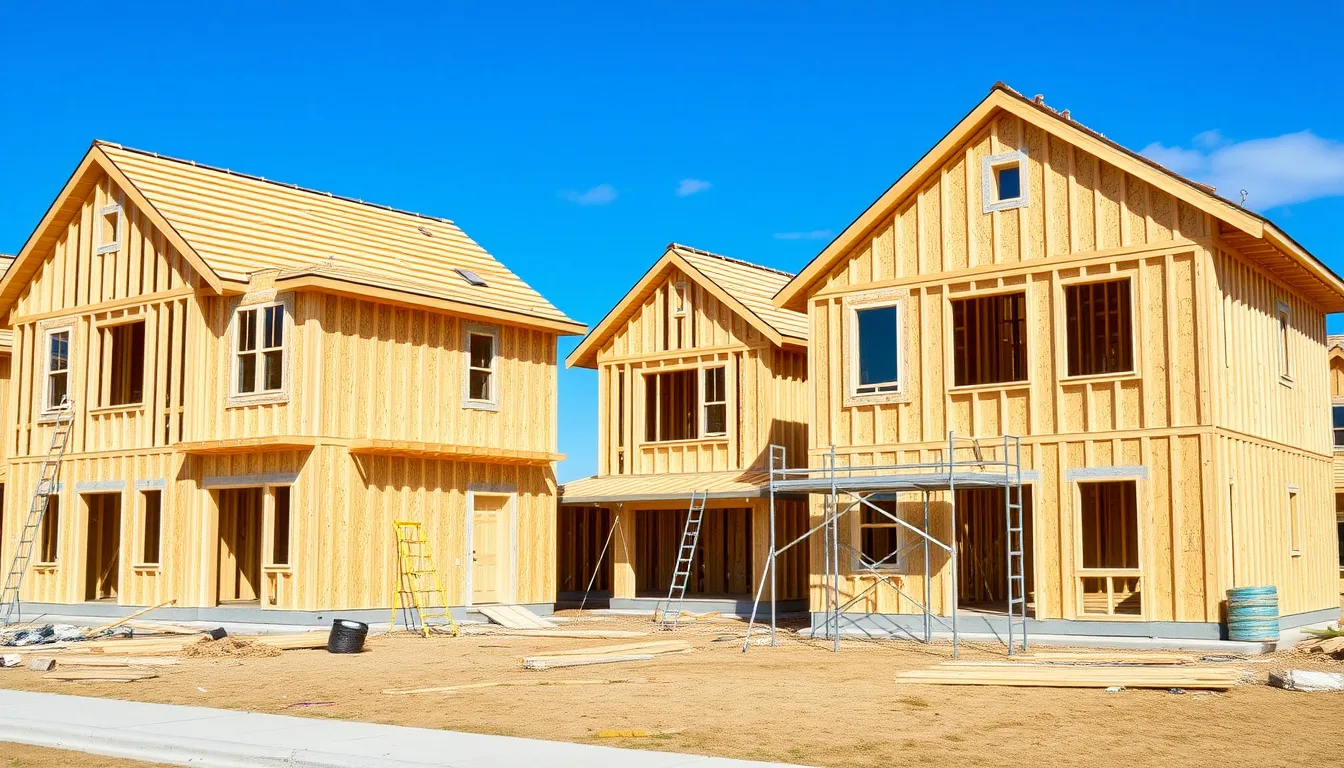
Builders Risk Insurance for Tract Home & Production Builders
Course-of-construction coverage for the structure, materials, and fixtures on every active lot — from a single custom home to a full blanket subdivision policy.
What Builders Risk Insurance Protects
Builders risk — also called course-of-construction insurance — covers the structure itself, along with the building materials and fixtures on-site, from the moment ground is broken until the home is complete and handed off. It responds to fire, wind, hail, theft, and vandalism losses on a structure that has no occupant, no functioning security system in most cases, and no other insurance policy protecting it during the build.
Because an unoccupied structure under construction is a different risk profile than a finished, lived-in home, it needs its own dedicated policy — neither a standard homeowners policy nor a completed-structure commercial property policy will respond to a loss on a house that's still being framed.
Coverage typically extends to materials staged on-site awaiting installation and, depending on the policy, materials in transit to the jobsite — a meaningful gap many first-time applicants don't realize exists until they ask about it directly.
Who Buys This — Builder or Homeowner?
This is the single most common point of confusion in builders risk searches, and it's worth answering plainly: on a production or tract build, the builder or developer buys and holds the builders risk policy, because the builder owns the structure until closing. The homeowner has no insurable interest in a house they haven't purchased yet.
On a custom, owner-financed build, the arrangement can vary by contract — some construction loan agreements require the homeowner to carry builders risk directly, especially when the owner holds the land and is hiring a GC rather than buying a finished spec home. If you're a builder working under a contract like this, read the builders-risk clause carefully; it should name who is required to hold the policy and who is named as an additional insured.
For production builders selling completed spec homes, this question doesn't come up — you hold the policy on every active lot in the subdivision until each individual closing transfers ownership.
Multi-Lot & Blanket Builders Risk for Production Builders
A custom-home GC building one house at a time typically buys a single builders risk policy per project, written for that project's value and timeline. A production builder running a subdivision phase needs something different: a blanket or reporting-form builders risk policy that covers every active lot under construction at once, under a single limit and a single renewal date, rather than a stack of individual policies opened and closed lot by lot.
Blanket policies are built specifically for this use case — as new lots break ground within a covered phase, they're typically added under the existing policy rather than requiring a brand-new application each time, and as homes close and transfer to buyers, they roll off. The mechanics vary by carrier, so it matters to work with an agency that understands how reporting-form builders risk actually operates for a builder opening multiple phases per year, not just a single-project template.
What Drives the Cost of Your Policy
Builders risk premium is typically calculated as a percentage of the total insured value under construction — the completed value of the structure and materials, not the land. That base rate then moves with several factors: project type (a single custom home prices very differently than a blanket multi-lot subdivision policy), construction materials used, and location-specific exposure to wildfire, wind, and hail.
Project duration matters directly — a longer build timeline means more months of exposure to loss, and coverage duration needs to realistically match your expected timeline including likely delays. A builder who consistently underestimates build time and lets a policy lapse before closing is taking on real uninsured risk during exactly the period when a house sits closest to complete and most valuable.
Coverage Duration & Renewal
Standard builders risk policies are typically written in 3, 6, or 12-month terms, matched to your expected construction timeline. This is a genuine operational pain point for production builders: phases slip. Material delays, permitting holdups, and labor shortages routinely push a project past its original schedule, and a builders risk policy that expires before the home is complete leaves the structure uninsured at exactly the wrong moment.
Most carriers allow extensions, but they need to be requested before expiration, not after a loss has already occurred — a lapsed builders risk policy is not something that can be reinstated retroactively after a fire or storm. Building in a realistic buffer when you first set the policy term, and tracking renewal dates actively across every active lot in a phase, is one of the most overlooked administrative tasks on a production build.
What's Excluded from Builders Risk
Builders risk has real boundaries. Soil and land movement that occurs before construction actually starts — settling, erosion, or grading issues on raw land — typically isn't covered, since the policy is triggered by construction activity, not pre-existing site conditions. Faulty workmanship itself isn't covered, mirroring general liability's same exclusion; builders risk pays for the storm or fire that damages a structure, not for redoing work that was done poorly.
Flood and earthquake are typically excluded from a standard builders risk policy and require a separate endorsement or standalone policy — a critical gap to close for builders working in flood zones or seismic regions, and one lenders in those areas frequently require proof of before releasing draws.
- Not covered without endorsement: flood
- Not covered without endorsement: earthquake
- Not covered: soil/land movement prior to construction start
- Not covered: faulty workmanship itself
Builders Risk vs. General Liability vs. Homeowners Insurance
These three policies get confused constantly, and each protects something different. Builders risk covers the physical structure and materials under construction — the thing being built. General liability covers your business against third-party injury and property damage claims — the thing you could be sued for. Homeowners insurance covers a completed, occupied home and its owner's liability — and it doesn't start until after builders risk ends and the buyer takes possession.
A production builder needs both builders risk and general liability running simultaneously throughout construction; homeowners insurance is the buyer's responsibility to arrange starting at closing, and coordinating that handoff date cleanly is a real operational detail worth building a checklist around.
How to Qualify & Apply
Applying for builders risk coverage requires the underwriter to understand the total insured value of the project (the completed construction value), the expected completion timeline, and the security measures in place on an unoccupied site — fencing, lighting, and whether the property is actively monitored between crew visits, all of which affect theft and vandalism exposure.
For blanket multi-lot policies, underwriters also want visibility into how many lots you expect to have active at any one time across a phase and your history of completing projects on schedule. Builders with a track record of on-time closings and clean prior builders risk claims history qualify for better terms than a first-time applicant with no history to point to.
Get a Builders Risk Quote
Whether you need a single policy for one custom-home project or a blanket policy covering every active lot in a subdivision phase, we'll structure builders risk coverage around your actual build schedule and total insured value — not a one-size template.
Call 844-967-5247 or email josh@contractorschoiceagency.com for a free quote. NPN #8608479. Licensed nationwide across all 50 states.
Builders Risk FAQs
Straight answers before you apply
On a production or tract build, the builder or developer buys and holds the builders risk policy since they own the structure until closing. On a custom, owner-financed build, the arrangement varies by contract — sometimes the homeowner is required to carry it — so check your specific build contract.
Yes — without it, a single fire, storm, or theft loss on an unoccupied, uninsured structure under construction falls entirely on the builder's balance sheet, and most lenders and land developers require proof of builders risk before releasing funds or permitting a phase to begin.
Often, yes — many carriers offer blanket/reporting-form builders risk policies designed specifically for production builders working multiple lots at once, rather than requiring a separate policy per home.
No — builders risk coverage typically ends at completion/closing/occupancy; the buyer's homeowners insurance takes over from there. Coordinating the handoff date on every closing is a real operational detail production builders need a process for.
Builders risk premium is typically a percentage of the total insured value under construction, and scales with project type, location, and coverage duration — a single custom home costs far less to insure than a blanket multi-lot subdivision policy.
Building a subdivision? Get coverage sized for the job.
Fast quotes nationwide for production homebuilders — general liability, builders risk, workers' comp, and bonds, from one agency that speaks your trade.