How Much Does General Liability Insurance Cost for a Homebuilder in 2026?
If you've searched for a straight answer on what general liability insurance costs a homebuilder in 2026, you've probably found a lot of "starting at" numbers and not much explanation of why your quote might land nowhere near them. That's because GL pricing for a production homebuilder or residential GC isn't a flat rate — it's underwritten off your actual operation. This guide breaks down exactly what moves the number, in order of impact, so you know what you're being priced on before you ever pick up the phone.
It's also worth addressing the "how much does a $1,000,000 policy cost" or "how much for a $2 million policy" version of this question directly, since it's one of the most common ways builders search for this. The limit you carry — $1M, $2M, or higher — is only one input among several, and it doesn't scale cost in a straight line by itself. Two builders both carrying $1M in GL limits can pay very different premiums depending on their payroll, project mix, and claims history. The limit sets your maximum coverage; it doesn't set your price on its own.
What Does General Liability Insurance Actually Cost a Homebuilder?
There isn't a single honest number to give here, and any page that gives you one flat figure is oversimplifying. The real range is wide by design: a small custom-home GC carrying modest payroll and a handful of projects a year might pay a few thousand dollars annually for general liability alone, while a multi-phase production builder running several active subdivisions, higher payroll, and higher limits can land well into five or six figures a year once GL is priced alongside the rest of their coverage stack.
What we can say with confidence, based on current market data, is that this is a genuinely high-value insurance category — search advertising data on general liability and general contractor insurance terms runs $100 or more per click nationally, which reflects real premium value behind every quote in this space, not a commodity price. The only way to get an actual number for your business is a quote built off your real payroll, revenue, project mix, and claims history — which is exactly how we build ours.
That gap between how little it costs to find information about this coverage online and how much the actual policies are worth is worth noting for another reason: it means a lot of the generic advice you'll find on general contractor insurance cost is written for a broad audience of trade contractors, not homebuilders specifically. A single-trade subcontractor's GL cost profile and a production homebuilder's aren't the same, even at similar revenue — which is exactly what the completed-operations section below gets into.
The Factors That Move Your Premium the Most
A handful of variables do almost all the work in determining where your GL premium lands:
- Payroll and revenue. GL premium is typically rated in large part off your payroll and gross revenue — the more people and dollars flowing through your operation, the larger the exposure base a carrier is underwriting.
- Number of active lots or phases. A builder running four active lots simultaneously carries a different exposure profile than one finishing a single custom home, even at similar annual revenue — simultaneous jobsite exposure and the chance of a claim touching multiple structures at once both factor into pricing.
- Prior claims history. A clean loss history is one of the most direct levers you control. Carriers price off your claims experience, and a builder with a documented pattern of claims — especially completed-operations claims — will see that reflected in premium.
- State. Where you build matters as much as how much you build. Litigation environment, weather/catastrophe exposure, and state-specific liability law all shift pricing, sometimes substantially — more on this below.
- Trade mix, if you self-perform any work. A builder who self-performs framing, concrete, or other trade work in-house carries different (usually higher) exposure than one who subcontracts everything and relies on subcontractor insurance requirements to shift that risk.
Every one of these gets asked about on a real application, and every one of them is doing real work in the final number you're quoted. None of them work in isolation, either — a builder with a strong safety record but rapid growth into three new active lots this year is going to get a different conversation from an underwriter than one with flat, predictable volume, even at identical revenue. That's part of why a generic online rate estimate rarely matches a real quote: it can't see the combination.
Why California (and Other High-Litigation States) Cost More
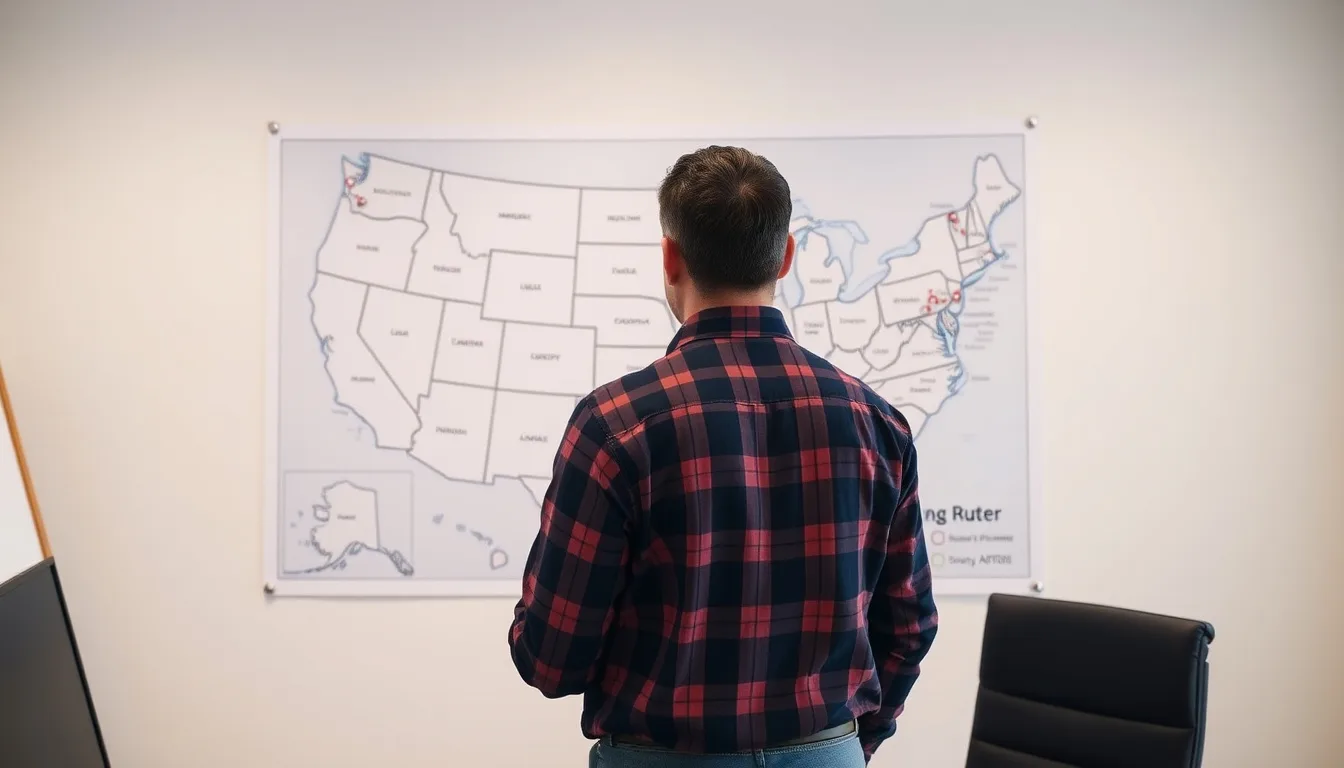
State is one of the biggest levers on this list, and California is the clearest example of why. Search-advertising data on state-specific general liability terms shows insurers and agencies bidding $150.83 per click on California-specific contractor GL search terms, compared with $101.96 on the equivalent national head term — roughly a 48% gap. That gap in what advertisers are willing to pay to reach a California GL shopper is a strong market signal of the higher premium value, and higher claim exposure, carriers see in that state relative to the national average.
That pattern isn't unique to California, even though it's the clearest example in the data. States with more litigation-friendly liability law, higher construction-defect claim volume, or more catastrophe exposure (wildfire, hail, hurricane-prone coastal regions) tend to price GL higher across the board — the underlying driver is the same regardless of which state it shows up in: carriers price to the claims environment they actually operate in, not a national average. If you build across multiple states, expect your per-state pricing to reflect each state's own risk profile rather than one blended number.
For a production builder expanding into a new state or region, this is worth planning around rather than discovering at renewal. A phase budget built off your home-state GL cost can be meaningfully off if the new market carries a higher-litigation profile — worth a call to your agent before you're deep into land acquisition and pro forma numbers for that phase, not after.
Completed Operations: The Homebuilder-Specific Cost Driver
This is the factor that separates homebuilder GL pricing from a single-trade subcontractor's policy, and it's worth understanding even though it rarely shows up as a line item on a quote.
Completed operations coverage is the part of a GL policy that responds to third-party property damage or bodily injury claims arising from work you already finished — not an active jobsite incident, but a defect that surfaces after the home is built and sold. A framing subcontractor's completed-operations exposure closes out relatively quickly once their scope on one house is done. A homebuilder's exposure runs much longer and much wider: a defect in a floor plan, a systemic issue with a material batch, or a construction detail repeated across an entire subdivision phase can surface years after closing and affect not one buyer but dozens, all from the same underlying cause.
That long-tail, multi-buyer exposure is a structural reason homebuilder GL pricing runs differently than a comparable-revenue single-trade contractor's policy, even before state, payroll, or claims history are factored in. It's also why the completed-operations tail length and limits on your policy deserve real attention, not just the per-incident limit on the declarations page.
It's also a reason we don't recommend shopping homebuilder GL purely on premium. A cheaper policy with a thinner completed-operations tail or lower aggregate limit can look like savings today and become a real problem five years from now when a defect claim surfaces across a phase you already closed out. The premium difference between adequate and inadequate completed-operations coverage is usually smaller than builders expect — it's worth asking about directly rather than assuming the cheapest quote is the equivalent policy.
How to Qualify for a Better Rate
None of the factors above are entirely outside your control. A few things reliably move your quote in the right direction:
- Document a real safety program. Carriers price partly on perceived risk management, not just history — a written safety program, jobsite protocols, and documented training all support a better rate, even before you have years of clean claims data to show for it.
- Enforce subcontractor insurance requirements. Requiring proof of GL (and workers' comp, or a documented exemption) from every subcontractor on every lot reduces the chance an uninsured sub's claim lands on your policy instead of theirs.
- Keep a clean, well-documented claims history. When something does happen, thorough documentation and prompt reporting help going forward, even on a claim that gets paid — carriers weigh how a claim was handled, not just that one occurred.
- Bundle your coverage lines. Carriers frequently offer package pricing when GL, workers' comp, and other lines are bound together rather than placed separately across multiple carriers — bundling also simplifies renewal and claims handling, which is worth something even before the discount.
- Keep consistent, verifiable revenue and payroll numbers. Underwriters price off what you report; clean, consistent financials from year to year support a smoother renewal and fewer pricing surprises at audit.
None of these are one-time fixes — carriers reward builders who can show the pattern renewal after renewal, not just a good year. A safety program adopted six months before a quote is a start; three or four years of documented practice, tied to an actual claims record, is what really moves pricing over time. If you're just starting to formalize this, expect the first renewal or two to reflect the improvement gradually rather than all at once.
Get a Real Number for Your Operation
Every homebuilder's GL cost comes down to the same handful of inputs — payroll, revenue, active lots, claims history, and state — run through underwriting specific to your business, not a generic template. The fastest way to see where you actually land is a real quote built off your numbers.
Call 844-967-5247 for a free quote, and we'll price your general liability coverage — and the rest of your coverage stack, if you need it — based on how you actually build, not a rate card.
Ready for a real quote?
Fast quotes nationwide — tell us about your operation and get a coverage package built for production-scale building.